1. Materials Science: High-Strength Fibers for Energy Absorption
The key ballistic materials in helmets typically include the following high-performance fibers:
Aramid Fibers (e.g., Kevlar®)
Properties: High toughness, low density, tensile strength 5x that of steel.
Principle: Upon bullet impact, the fibers stretch and deform to absorb kinetic energy. Friction and fiber breakage dissipate the bullet's energy.
Multi-layer structure: Stacked layers progressively slow the bullet until it stops.
Ultra-High-Molecular-Weight Polyethylene (UHMWPE)
Properties: Lighter than Kevlar, higher strength (can stop rifle rounds).
Principle: Highly aligned molecular chains convert impact energy into heat while elastically deforming to deflect some of the force.
Composite Armor (e.g., Ceramic + Fiber)
Ceramic Layer (Alumina, Silicon Carbide): Extreme hardness shatters the bullet's core but is brittle.
Fiber Backing: Absorbs residual energy after ceramic fragmentation, preventing spalling.
2. Multi-Layer Structure:
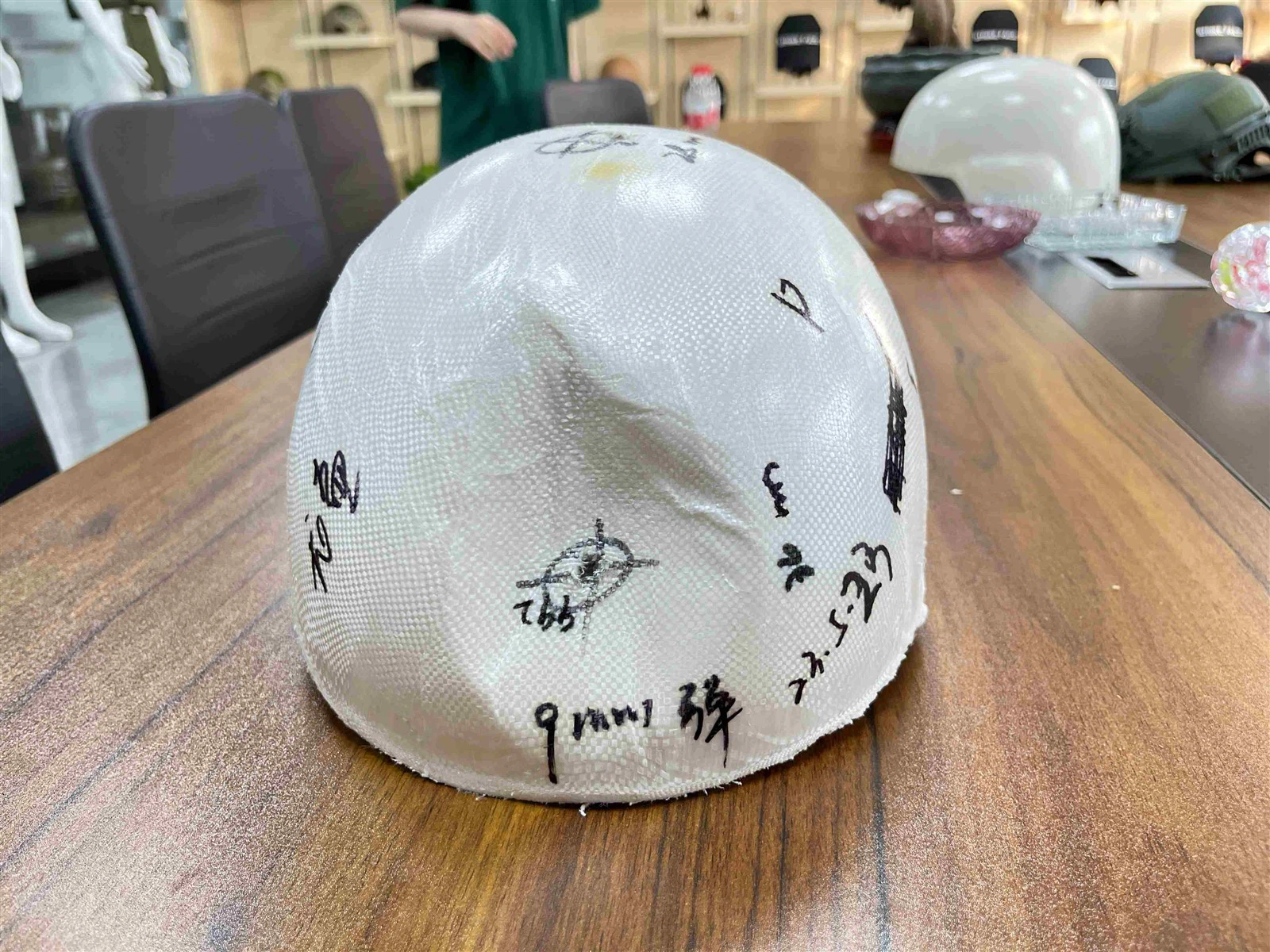
Ballistic helmets usually employ a multi-layer design, with each layer serving a distinct function. When a bullet strikes the helmet, the first layer deforms and fractures, absorbing a portion of the energy. The remaining energy is then transferred sequentially to subsequent layers, where it is further dispersed and absorbed. This process continues until the residual energy is fully dissipated, preventing bullet penetration.
3. Curved Design:
The curved shape of ballistic helmets also aids in dispersing impact forces. The arched surface spreads the bullet's impact over a larger area, reducing localized pressure and minimizing the risk of penetration.
4. Energy-Absorbing Structures:
Some ballistic helmets incorporate additional energy-absorbing structures, such as foam padding or honeycomb designs, inside the helmet. These structures further absorb and dissipate the bullet's energy, enhancing the helmet's protective effectiveness.