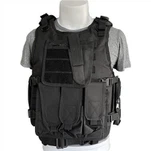
The edge of a ballistic plate is its most vulnerable area. Unlike the center of the plate, which is supported by the entire structure, the edge is a free boundary with minimal support. This makes it susceptible to bending, cracking, or delamination upon impact. A shot near the edge may cause the plate to fail even if it is well within its rated threat level. To combat this, manufacturers employ several techniques. The most common is edge trimming. Plates are cut to a shape that minimizes vulnerable sharp corners, often using a curved or beveled edge. More importantly, the edges undergo a reinforcement process. For ceramic plates, this often involves a polyurethane or rubber edge coating that is molded around the perimeter. This coating absorbs impact energy and helps hold the ceramic together, preventing cracks from propagating from the edge. For polyethylene plates, the edges are typically heat-sealed and compressed to create a denser, more durable boundary that is less likely to fray or separate. These processes are critical for ensuring the plate's performance is consistent across its entire surface.
Core Knowledge:
Structural Weakness: The unsupported edge of a plate is prone to bending and cracking upon impact, which can lead to penetration even from a round the plate should stop.
Edge Trimming: Plates are cut with rounded, beveled, or tapered edges to reduce the presence of weak, sharp corners that are prone to failure.
Reinforcement Coatings: Ceramic plates are often wrapped in a durable rubber or polyurethane edge coating that acts as a shock absorber and contains fragmentation.
Densified Edges: Polyethylene plates have their edges heat-treated and compressed to increase density and prevent delamination of the laminated layers.