

Bullet Proof Shield
A bullet proof shield, also called a tactical shield or bulletproof shield, is a protection device deployed by police, paramilitaries, and armed forces that are designed to stop or deflect bullets and other projectiles fired at their carrier. Ballistic shields also protect from less serious threats such as thrown items.
Compact protection
Having a ballistic shield that is compact enough for an officer to walk through doorways, even in small mobile homes, and maintain protection is extremely important. The shield also weighs only 25 pounds with Level III rifle protection ballistic plates in place. The compactness, weight, and ease of movement when deployed were key considerations in our ballistic shield choice.
Mobility
Bulletproof shields are designed to be lightweight and easy to maneuver, making them ideal for tactical situations that require a lot of movement. They can be easily carried and deployed when needed, without hindering the user's mobility.
Durability
Bulletproof shields are often made from materials that can withstand gunfire and other types of ballistic damage. This makes them durable and long-lasting, providing a reliable shield that can be used over and over again.
Versatility
Bulletproof shields can be used in a variety of situations, from hostage scenarios and active shooter situations to riot control and perimeter defense. This versatility makes them a valuable tool for law enforcement, military, and security personnel.
Psychological Effect
Bulletproof shields can also have a psychological effect on attackers, who may be deterred by the sight of a heavily armed and well-protected adversary. This can help prevent violent confrontations and promote peaceful resolution of conflicts.
-
 Level IIIA Bullet Proof Shield1. Material: UHMWPE. 2. Thickness: 6.5mm. 3. Dimension: 900*500mm. 4. Protection Area: 0.45 sqm. 5. Weight: 5.4kg. 6. Protection Level: NIJ IIIA stop .44 Magnum roundsAdd to Inquiry
 -
 Handheld Bulletproof Shield1. Material: UHMWPE. 3. Thickness: 6.5mm. 4. Protection Area: 0.58 sqm. 5. Weight: 5.2kg. 6. Protection Level: NIJ IIIA stop .44 Magnum roundsAdd to Inquiry
 -
 Handheld Bulletproof Shield Level 3 Ballistic ShieldHandheld Bulletproof Shield Level 3 Ballistic Shield. 1. Material: UHMW-PE. 2. Total Size: 550x900±5mm . Visor Size: 100x200mm. 3. Weight: About 13kg±2kg. 4. Bullet Stop: 7.62x51 M80 NATO; 7.62x39Add to Inquiry
 -
 Level Nij Iv Bullet Proof Shield With WheelsLevel Nij Iv Bullet Proof Shield With Wheels. 1. Material: Sic carbide+UHMWPE. 2. Total Size: 550x900±5mm . Visor Size: 100x200mm. 3. Weight: 24.5±2kg(Steel wheels are not included). 4. Bullet Stop:Add to Inquiry
 -
 Portable Ballistic Shield1. Product Name: Portable Ballistic Shield. 2. Material: PE. 3. Outline Dimension: 800*500mm. 4. Weight:<11kgAdd to Inquiry
 -
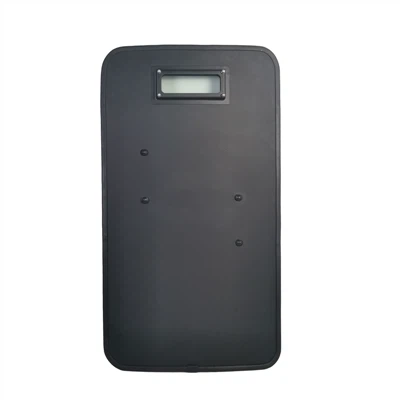 Hot Sale Handheld Ballistic Bulletproof Shield1. Product Name: Hot Sale Handheld Ballistic Bulletproof Shield. 2. Material: PE. 3. Outline Dimension: 900*500mm. 4. Observation window: 170*60mm. 5. Weight:<5kgAdd to Inquiry
 -
 Factory Armor Tactical Military Bulletproof Shield With Lamp1. Material: PE. 2. Outline Dimension: 900*500*6.5mm. 3. Weight: About 5kg. 4. Bulletproof Level: NIJ IIIA and.44magAdd to Inquiry
 -
 Police Aluminum Anti Riot Shield Military Equipment With ...Police Aluminum Anti Riot Shield Military Equipment with a Hole WindowAdd to Inquiry
 -
 Police Aluminum Anti Riot Shield Police Military Equipmen...Police Aluminum Anti Riot Shield Police Military Equipment with a Hole WindowAdd to Inquiry
 -
 Police Protective Anti Riot Shield For MilitaryPolice Protective Anti Riot Shield for MilitaryAdd to Inquiry
 -
 Hi-Quality Anti Riot Shield For Police MilitaryHi-Quality Anti Riot Shield for Police MilitaryAdd to Inquiry
 -
 Rectangular Police Anti Riot Shield For Body ProtectorRectangular Police Anti Riot Shield for Body ProtectorAdd to Inquiry


- Tel: +8618757210859
- Fax: +86-572-8265675
- Email: armour@foxarmour.com
- Add: No.171, YiXian Road, FuXi Industrial Area, Zhejiang, China.
Why Choose us
Quality
Customers are always looking for high-quality products that will either last long or serve their intended purpose effectively. You should choose a product that meets your needs in terms of quality.
Experience
With several years of experience in the industry, we have a wealth of knowledge and expertise that we apply to each project we undertake.
Customer Service
Our team provides excellent customer service and support, ensuring that our clients are satisfied with their products and overall experience.
Price
Price is an essential factor when choosing a product. You should ensure that the price of the product is within your budget and offers value for money.
Ballistic armor level iii-A
Protects against 9 mm handgun rounds, handgun rounds up to .44 magnum. and 12 gauge shotgun shells, including .357sig. They can be made from hard or soft armor. This is undoubtedly the most common level requested in most ballistic shields used by law enforcement. These shields are very lightweight and easy to carry or move around.
Ballistic armor level III
Protects against rifle rounds up to 7.62 mm FMJ and 5.56mm, a mass of 147 grains, and a velocity of 2780 fts/s. These shields are very popular among law enforcement, school safety officers and other situations where rifles may be present. Most sizes of these shields can be moved easily (without the need of a trolley) and are being used more and more as active shooter situations tend to use more rifle ammunition than handgun ammunition.
Ballistic armor level IV
Protects against armor-piercing (AP) rifle rounds such as 7.62 AP and .30. Although law enforcement does use this level of shield occasionally, it is extremely heavy and requires a trolley to be moved around. Therefore, most law enforcement professionals will tend to opt for a level IIIA or level III ballistic shield, given that AP rounds historically tend to not be used as much during active shooter situations.
Which are the Most Important Specifications of a Bullet Proof Shield?
Weight
The weight of a bullet proof shield is the key spec to think about. Specially, in connection with the maximum protection it offers versus how portable it is.Generally, the heavier the shield, the higher the protection. But at the expense of mobility and speed.On the flip side, lighter weight shields sacrifice some protection. But are easier to stabilize on the go, and make the operator faster and more maneuverable on their feet.
As a rough guide, portable shields run from a mere 5lbs to nearly ten times that. Level IIIA shields come in somewhere between 8lbs and 30lbs.Push shields, on the other hand, can tip the scales at a whopping several hundred pounds.Bear in mind too that it’s not only the ballistic materials that account for the weight of a tactical shield. Adding one or more features to the shield will up its mass by varying degrees, sometimes quite significantly.
Shape & curvature
Once the norm, flat bullet proof shield are the least costly to turn out. When forming a wall of defense, they can also be linked together, horizontally or vertically, more tightly.Then again, curved ballistic shields give greater protection at the edges and from shots coming in at an angle. Along with dispersing a bullet’s energy more efficiently.Rectangular tactical shields are still the standard shape.
Flat tactical shield
Dynamic shape bullet proof shields come in all manner of styles. And count a platform that lets the operator, most quickly and easily, hold and fire a weapon.V-shape ballistic shields, as can be guessed, are tapered towards the bottom. They’re purposed for linear assaults and to draw fire away from the centerline.
Dynamic shape tactical shield
Whatever the shield’s profile, typically, they can be customized with a weapon cut-out (or else a weapon support bracket). Allowing the operator to insert (or seat) a firearm without being fully exposed.
Size
Even the most compact bullet proof shield affords greater protective coverage than just about any body armor panel or plate.They start as little as 8”x16”. Those up to about 16”x20” are most suited for when there’s nearby cover from trees, walls, and whatnot; or in confined spaces (think stairwells, hallways, or tunnels).They’re appropriate for safeguarding the head and torso. At the same time, can be readied instantly and a breeze to stow.More mainstream proportioned ballistic shields, from 20”x30” to 24”x36”, provide arguably the best combination of mobility and protection.Those bigger yet, at some 24”x48”, can manage full-length protection. Shielding either a single operator or a stack of operators behind.
Color
It wasn’t long ago that bullet proof shields could only be had in black. Reason being so the shield wasn’t overly conspicuous and didn’t attract attention.Though still the most widespread color, lately, tactical shields are being knocked out in extra colors/patterns. Made out of ballistic polycarbonate laminate, they give the operator a more or less unobstructed view of the goings-on around them.

Carry system
Save for those which have to be pushed, tactical shields are lugged around by means of single or double handles at the back.Many are built for ambidextrous use so equally transportable by both left- and right-handed users. Oftentimes with the option of two or three different carry positions.How the handgrip is configured will impact how hassle-free the shield is to be carried or swapped from one hand to another.
Over and above affecting the class of firearm that can used with the shield and how the gun can be held, shot, and loaded/reloaded.
Apart from rigid handles, bullet proof shields can be accessorized to provide added carrying comfort during extended use. High-density padding, forearm straps, and quick-release shoulder sling/harness, for instance.
Viewing port
Bar those which are transparent, most tactical bullet proof shields can be rigged with a viewport.A clear window for seeing straight ahead and, depending on the size and shape, to the sides, and up and down so the operator has eyes on at all moments without having to peer round the side of the shield and leave their head vulnerable.Viewing ports are armored, of course; normally of ballistic polycarbonate.
Mounted lighting
Any number of super tough high-power spotlights can be installed on the strike face of a ballistic bullet proof shield. Exactly where on the front, though, needs mulling over carefully.Either built-in or as an add-on, shield lights serve a dual purpose.For one, the operator can clock obstacles, threats, and other things in dark environments.For another, those facing the shield are forced to look away, turn around or, with strobe lighting, become disoriented. Whichever, it gives the shield bearer a tactical advantage.
How to Choose a Bullet Proof Shield
Mobility
Bullet proof shields can be permanent, handheld or on wheels for ease of mobility. Handheld shields may be lighter and easier to transport, but permanent and wheeled ballistic shields provide a more strategic solution — a heavier, more durable shield with head-to-toe coverage and a large viewing port. These are among the many advantages over handheld ballistic shields.
Size
The bullet proof shield size should be appropriate for the intended use. Larger shields provide comprehensive coverage, but may also be heavier and more challenging to maneuver in tight spaces. Smaller shields can be easier to handle, but offer less protection. Consider the space you will be operating in and the potential threats you will face when choosing a shield size.
Components
A bullet proof shield typically consists of several parts, including the shield body, viewport and handle. The materials used in each component can impact the shield’s overall effectiveness and durability. Look for high-quality materials that can withstand ballistic impacts.
Attachments
Users can fit some bullet proof shields with additional accessories, such as lighting systems, cameras or communication devices. These attachments can provide valuable information and support during high-stress situations, but can also add weight and complexity. Consider whether these attachments are necessary for your intended use and whether they are compatible with the shield you are considering.
NIJ level
When choosing a ballistic shield, look up the NIJ protection level needed for the intended use.
Durability
Designers create ballistic shields to withstand high-impact situations, so you should choose a durable, built-to-last option. Look for shields made from materials like ballistic steel or high-strength polymers, and consider the manufacturer’s track record of producing high-quality products.
Ballistic shields
These are common types of bullet proof shields that are designed to protect against being hit by bullets. They are made of materials like steel, Kevlar, or ceramics and offer varying levels of protection, depending on the type of threat.
Riot shields
These types of shields are designed to protect against non-lethal projectiles like rubber bullets, rocks, and bottles. They are larger than ballistic shields and are typically used by law enforcement during crowd control situations.
Blast shields
These shields are designed to protect against explosive blasts and are commonly used by military personnel in combat situations. They are made of materials like lightweight metals and often have a special layer to disperse the force of the blast.
Entry shields
These shields are designed to protect law enforcement personnel during entry into high-risk situations like a hostage situation or an active shooter scenario. They are made of similar materials to ballistic shields but often have additional features like lights or communication systems.
Tactical shields
These types of shields are designed for special forces or tactical teams. They are lightweight and often have additional features like night vision capabilities or weapon mounts to aid in combat situations.
Our Factory
FOX ARMOUR is one factory specializing in the manufacture and export of various Police & Army & Sports Body Protectors in rich experience. We have profuse designs with high-quality (CE, BETA, NIJ, CNAS, ilac-MRA, ISO, SGS, BSCI APPROVED), and expressly, our price is very competitive because we are manufactory, we are the source. You are welcome to visit our website www.foxarmour.com which includes our company profiles, history and something latest designs.

Our Certificate
We have profuse designs with high-quality (CE, BETA, NIJ, CNAS, ilac-MRA , ISO, SGS, BSCI APPROVED), and expressly, our price is very competitive because we are manufacture , we are the source.


Production Epuipment
We have a professional production line and team.We have advanced equipment.


Asked Questions
Q: Will a ballistic shield stop an AR-15?
Q: Do riot shields actually stop bullets?
Q: Can a tactical shield stop a bullet?
Q: What can bullets not go through?
Q: What types of situations are bullet proof shields used in?
Q: How heavy are bullet proof shields?
Q: Can anyone buy a bullet proof shield?
Q: How do you maintain a bullet proof shield?
Q: How much does a bullet proof shield cost?
Q: Are there any disadvantages to using a bullet proof shield?
Q: What is a bullet proof shield?
Q: How does a bullet proof shield work?
Q: What materials are used to make a bullet proof shield?
Q: How effective are bullet proof shields?
Q: Is there a shield that can stop bullets?
Q: How effective are bulletproof shield?
Q: Can a riot shield stop a bullet?
Q: Will a ballistic shield stop an AR-15?
Q: Are bullet proof masks real?
Q: What is the strongest bulletproof material?
We're well-known as one of the leading bullet proof shield manufacturers and suppliers in China. We warmly welcome you to wholesale high quality bullet proof shield at competitive price from our factory. Also, custom service is available.
Ballistic Shield, Police Ballistic Shield, Protective Bulletproof Shields