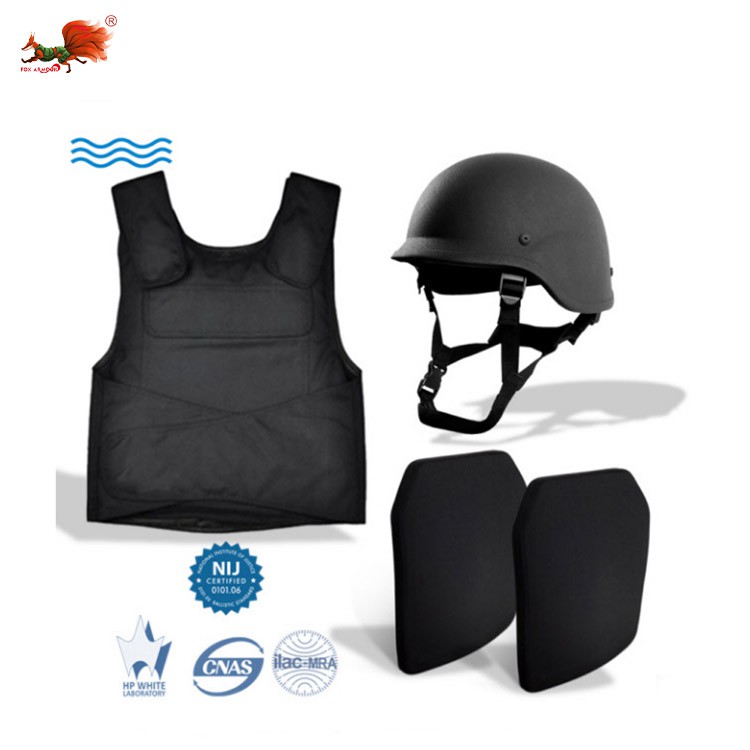
Traditional soft body armor is designed to stop bullets but may be easily penetrated by a sharp blade or ice pick due to the different mechanics involved. Bullets are stopped by the fibers' ability to engage and stretch, while edged weapons concentrate force on a tiny point, pushing fibers apart rather than stretching them. Multi-threat armor solves this by integrating different protective materials into a single package. The standard design combines traditional ballistic Aramid or PE layers with additional layers of a more rigid, slash-resistant material. This can be a tightly woven, high-denier cut-resistant fabric, a layer of chain mail, or a laminate of stainless steel rings. These materials are designed to resist the slicing action of a blade and the puncturing action of a spike. The resulting armor panel is thicker and heavier than a pure ballistic panel but provides comprehensive protection against the most common public safety threats: handguns, knives, and needles. This is particularly valuable for correctional officers, law enforcement, and security personnel who face a wide and unpredictable array of weapons.
Core Knowledge:
Differing Threats: Bullets and blades threaten armor differently. Bullets require energy absorption through fiber engagement, while blades require resistance to cutting and puncturing.
Composite Design: Multi-threat armor combines ballistic fibers (for bullets) with materials like chain mail, coated glass cloth, or ultra-high-density plastics (for blades and spikes).
Compromise on Weight/Thickness: Providing protection against both threats results in a panel that is thicker, stiffer, and heavier than a dedicated ballistic-only panel of the same threat level.
Specialized Use Case: Essential for roles where the threat is blended, such as prison guards, tactical medics, and officers conducting searches or crowd control where edged weapons are prevalent.