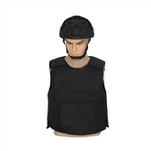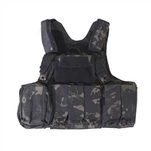
A full-body riot suit must protect the wearer from head to toe without rendering them immobile. The greatest challenge lies in protecting the joints-shoulders, elbows, hips, and knees-which require flexibility. The solution is segmented armor. Instead of using large, rigid plates, these areas are protected by smaller, overlapping plates or scales. These plates are attached to a flexible base material, allowing them to slide over one another during movement. This provides continuous coverage throughout the range of motion. For example, when an officer bends their arm, the elbow armor expands and contracts like an accordion, with the segments separating and coming back together without exposing the joint. The materials used are also crucial; high-density closed-cell foams are used for blunt impact protection, while tougher thermoplastic polyurethane (TPU) or polycarbonate is used for the hard shells. This intricate design allows for a remarkable degree of mobility while ensuring that vital joints are shielded from blows, thrown objects, and other impacts common in riot control.
Core Knowledge:
Segmented Design: Armor for joints uses multiple small, hard plates that overlap and are connected by flexible strapping or fabric, allowing them to move like scales.
Sliding Plate System: The plates slide over each other when the joint is bent, maintaining coverage without gaping open or restricting movement.
Energy-Absorbing Padding: Underneath the hard segments, thick foam padding absorbs the energy from impacts, preventing bruising and bone fractures.
Strategic Coverage: The design focuses protection on the bony prominences of the joint (kneecap, elbow) while using flexible materials in the joint crease to allow for full flexion.