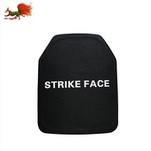
The true defensive power of a shield is realized when multiple units are combined to form a continuous, unbroken wall. This tactic, known as forming a "shield wall" or "phalanx," allows a team to advance on or control a crowd while presenting a nearly impervious front. To facilitate this, many riot and tactical shields are equipped with interlocking mechanisms on their sides. These are typically robust, simple mechanical devices like metal hooks, slots, or reinforced grooves. The shield on the left will have a mechanism designed to connect securely with the corresponding mechanism on the right side of the shield next to it. When locked together, these shields prevent gaps from appearing between them that could be exploited by aggressors. This interconnected system provides mutual stability; the shields support one another, making it much harder for the line to be breached by a concentrated push. It also allows the team to move as a single, coordinated unit. This feature is essential for public order policing, allowing a line of officers to safely advance, hold a line, or extract personnel from a volatile situation under a protective canopy of shields.
Core Knowledge:
Interlocking Mechanisms: Shields feature hardware on the sides-such as hooks, slots, or tabs-that allow them to physically connect to adjacent shields, creating a continuous barrier.
Formation Tactics: This enables teams to form shield walls or phalanxes for coordinated advances, crowd control, and protecting against thrown projectiles as a unified group.
Eliminating Gaps: The primary tactical purpose is to eliminate gaps between shields that could be exploited by threats to attack individual officers.
Mutual Support: Interconnected shields provide greater stability to the entire line, making it more resistant to being pushed back or breached by a charging crowd.