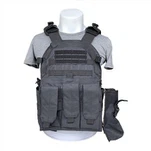
Body armor is not designed to cover the entire torso. It is strategically sized and shaped to protect the most critical vital organs whose damage would be immediately life-threatening. The standard for front and back plates is to cover the cardiac box and the vital thoracic triangle. This area is defined by the clavicles (collarbones) at the top, the diaphragm at the bottom, and the nipples or mid-armpit line on the sides. This zone contains the heart, major blood vessels (aorta, vena cava), and lungs. Protecting this area provides the highest chance of survival from a penetrating torso trauma. Armor that is too small may leave the heart or major vessels exposed. Armor that is too large, while providing more coverage, unnecessarily impedes mobility and increases weight. The design is a calculated balance between maximum protection for the most crucial organs and minimum size and weight to preserve the wearer's combat effectiveness. This is why plates are often "shooters cut" or "swimmers cut" – to provide this essential coverage without excess material.
Core Knowledge:
The Vital Zone: The primary coverage area is the "cardiac box" – the central torso containing the heart, major blood vessels, and lungs.
NIJ Minimum Size: The NIJ standard defines minimum size requirements for certified plates to ensure they cover this vital area for a range of body sizes.
Cut Styles: "Shooter's Cut" plates have angled shoulders to allow for a better rifle stock weld, while "Swimmer's Cut" plates are tapered at the shoulders and sides for increased mobility. Both are designed to protect the vital zone efficiently.
Trade-Off: Larger plates offer more coverage but add weight and restrict movement. The design goal is to protect what is necessary to survive while allowing the operator to fight effectively.