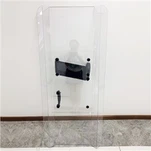
The evolution of hard armor plates from flat slabs to anatomically contoured masterpieces represents a massive leap in wearability and performance. Early plates were simple flat rectangles, which were uncomfortable, printed obviously under clothing, and restricted movement by digging into the torso when bending or twisting. The introduction of single-curve plates, curved in one dimension to fit the general shape of the chest, was a significant improvement. However, the true revolution came with multi-curve plates. These are engineered with complex compound curves that mirror the exact topography of the human torso: a pronounced curve across the chest, a taper at the sides to fit under the arms, and a contour to accommodate the rib cage. This three-dimensional shaping allows the plate to sit flush against the body, eliminating pressure points and gaps. The comfort difference is night and day; it feels like the plate is part of the body rather than an external burden. This improved fit also enhances mobility, allows for a more natural arm swing, and reduces printing under a uniform, making the wearer less of a target. While more complex and expensive to manufacture, the multi-curve design is now the benchmark for modern, high-end body armor.
Core Knowledge:
Flat Plates (Obsolete): Uncomfortable, restricted movement, and created obvious printing under clothing. They did not conform to the body, creating gaps and pressure points.
Single-Curve Plates: Curved in one dimension (usually horizontally), offering a basic fit to the chest's contour. A significant improvement over flat plates but still not ideal.
Multi-Curve Plates: The gold standard. Curved in multiple dimensions (horizontally, vertically, and diagonally) to precisely match the anatomy of the torso. This provides a custom-like fit, drastically improving comfort, mobility, and concealment.
Benefits of Contouring: A proper curve reduces "plate slap" during movement, distributes weight more evenly, allows for a better range of motion for shouldering weapons, and brings the weight closer to the body's center of gravity.