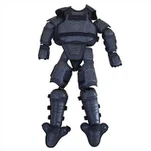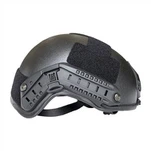
How does a manufacturer know their armor will still perform in five years? They use accelerated aging tests. The primary method is thermal aging. By placing the armor in an oven at an elevated temperature (e.g., 65°C / 149°F) for a specific duration, the chemical degradation processes that naturally occur over years are sped up. The relationship between time and temperature follows established scientific principles (like the Arrhenius equation), allowing labs to simulate, for example, 5 years of natural aging in just a few weeks. After this conditioning, the armor is subjected to the full battery of ballistic tests. If it passes, it provides high confidence that the armor will remain reliable throughout its stated warranty period. This process is a critical part of the NIJ certification and ensures that the armor won't fail due to material degradation before its intended service life is over.
Core Knowledge:
Thermal Acceleration: Elevated temperature is used to accelerate the chemical reactions that cause material degradation (oxidation, hydrolysis) in ballistic fibers and resins.
Predictive Modeling: Scientific models correlate time at a high temperature to equivalent years of natural aging at room temperature.
Post-Aging Testing: The critically important step is testing the artificially aged armor ballistically. It must stop the required threats after aging to validate its lifespan.
Quality Assurance: This process is essential for giving users and manufacturers confidence in the long-term reliability of the product.