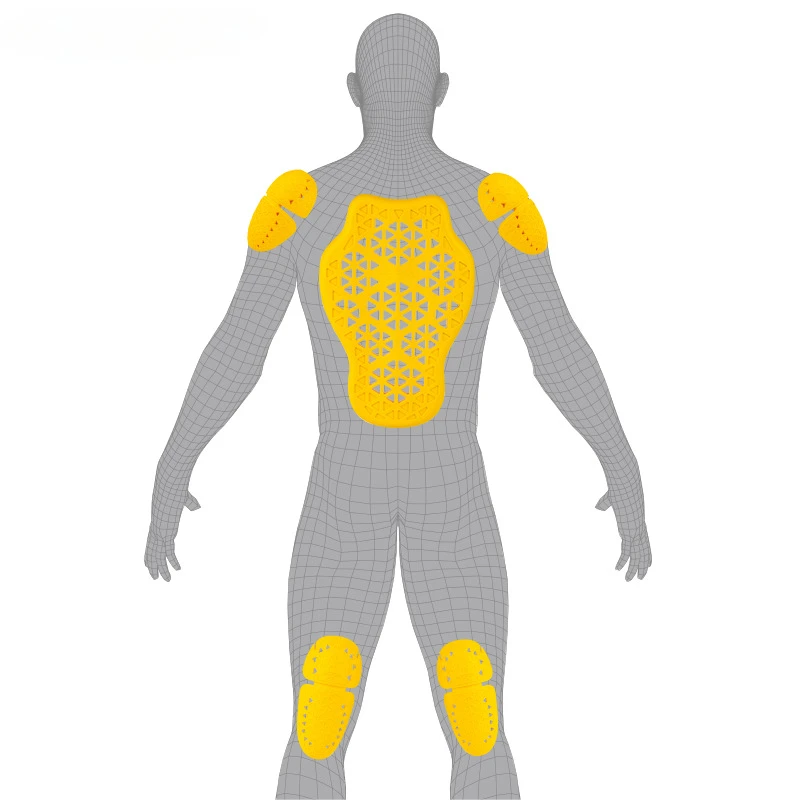
You're shopping for a new motorcycle jacket and see it includes "CE Level 1 armor." Another boasts "CE Level 2 back protector." Beyond the higher number, what does this actually mean for your safety on the road? Understanding this code is essential for making an informed decision about the level of impact protection you're purchasing.
The usage scenario for both levels is the same: protecting your joints and spine during a motorcycle accident. The difference lies in the severity of impact they are certified to handle. Think of it as a scale of risk mitigation. Level 1 armor is designed for lower-energy impacts, potentially more suitable for lower-speed urban commuting. Level 2 armor is engineered for higher-energy impacts, such as those likely encountered at highway speeds or during more severe accidents.
The materials used can be similar-high-density foams, advanced non-Newtonian polymers like D3O®, or multi-density composites. However, to achieve a Level 2 rating, the armor must be thicker, denser, or incorporate more advanced energy-dispersing technology. This is because the testing standard is significantly more rigorous. The CE certification process involves a standardized impact test where a striker is dropped onto the armor with a measured amount of energy. The key metric is the amount of force transmitted through the armor to the test anvil.
CE Level 1: The armor must transmit less than 18 kilonewtons (kN) of force on average.
CE Level 2: The armor must transmit less than 9 kN of force on average. It effectively must absorb and dissipate more than twice the energy of Level 1 armor.
The efficacy is directly related to injury prevention. Less force transmitted to your body means a lower risk of broken bones, severe soft tissue damage, and spinal injuries. Level 2 armor provides a significantly higher margin of safety.
Choosing between them is a matter of risk assessment. For any serious riding, especially at speeds above 50 mph, Level 2 armor is highly recommended and is considered the new benchmark for safety. Many high-quality jackets come with Level 1 armor as standard but have pockets large enough to accommodate aftermarket Level 2 upgrades, particularly for the back, shoulders, and knees. When selecting gear, prioritize Level 2 protection for your most vulnerable areas, especially the spine. Don't just settle for the armor that comes pre-installed; investing in upgraded Level 2 protectors is one of the most cost-effective safety upgrades you can make to your riding gear.