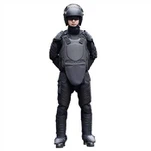
You've bought the recommended rollerblading protective set: knee pads, elbow pads, and wrist guards. You've strapped them on and feel ready to roll. But are you truly protected? In the world of impact sports, simply wearing gear is not enough; precise fit is the factor that determines whether that gear will function as intended during a fall.
The usage scenario for rollerblading pads is dynamic and unpredictable. A fall happens in a split second, often involving sliding, twisting, and direct impacts on joints. Ill-fitting pads are a major hazard. Knee pads that are too large can slide down your leg upon impact, exposing your kneecap to the pavement. Pads that are too small will have insufficient coverage, leaving areas vulnerable, and can restrict blood flow and movement. The primary scenario is impact on a hard, abrasive surface like concrete or asphalt.
The materials in rollerblading pads are designed for this: hard plastic caps to allow sliding and distribute impact force, and thick, soft foam underneath to absorb the shock. However, these materials are useless if the pad is not correctly positioned over the joint it is meant to protect. The straps and sleeve design are just as critical as the padding itself, as they are the system that maintains placement.
The efficacy of well-fitted pads is threefold:
Impact Absorption: The foam compresses directly under the point of impact, dissipating energy.
Abrasion Resistance: The hard shell slides, preventing your skin from making contact with the ground.
Joint Stabilization: Properly sized pads can help prevent hyperextension and sprains.
If the pad shifts, all these benefits are lost.
Choosing the right fit requires careful attention. Knee Pads: When standing with your leg straight, the hard cap's center should sit directly over your kneecap. When you bend your knee into a skating stance, the pad should remain centered and not dig into your thigh or calf. Straps should be tight enough to prevent movement but not cut off circulation. Elbow Pads: The cap should sit squarely on the point of your elbow. Bend your arm to ensure it stays in place. Wrist Guards: These are the most complex. They must fit snugly around your wrist and palm to effectively limit extreme bending upon impact, which is the primary cause of wrist fractures. There should be minimal movement between the guard and your hand.
Don't just buy a set based on height and weight charts. Try them on. Simulate a fall by getting into a low stance and moving around. Your gear should feel like a secure, second skin that moves with you, not a separate piece of equipment that you constantly have to adjust. In rollerblading, a perfect fit isn't a luxury-it's the very essence of safety.