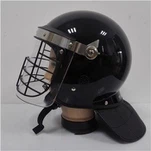
We often judge a helmet by its shell-its paintwork, its aerodynamic shape, its vents. But while the shell gets the glory, the true hero working invisibly to save your life is the humble inner liner. Understanding its function reveals why helmet technology is so much more than a hard hat.
The usage scenario is a violent, sudden impact. The shell's job is to prevent penetration and distribute the initial force over a wider area of the liner. But it's the liner that performs the miracle of deceleration.
The material is almost always EPS (Expanded Polystyrene) foam-the same stuff used in disposable coffee cups and coolers, but engineered and density-optimized for a very specific purpose. This foam is a matrix of sealed, air-filled cells. Its key property is that it is designed to crush in a controlled, predictable manner.
Here's how the efficacy works during an impact:
The helmet shell makes contact and distributes the force.
This force is transferred to the EPS liner.
The liner responds by collapsing, the tiny air cells bursting one after another.
This crushing action absorbs the kinetic energy of the impact over a longer period of time and distance (the thickness of the liner).
By slowing down the deceleration of your head, it dramatically reduces the G-forces experienced by your brain inside your skull, preventing or mitigating traumatic brain injury (TBI).
This is a one-time event. Once the EPS foam is crushed, it does not rebound. This is why helmets are single-use items after a crash; the energy-absorbing capability is used up.
The thickness and density of the liner are carefully calibrated. Areas that are more likely to impact (the front, sides, and top) often have thicker liner material. Some advanced helmets use multi-density liners-softer foam in key areas to manage lower-speed impacts and harder foam to manage higher-speed impacts without the liner bottoming out.
Choosing a helmet, therefore, means trusting in the quality and design of this unseen component. You cannot inspect it yourself. This is why buying from reputable brands that invest in research, development, and rigorous safety testing (DOT, ECE, SNELL) is non-negotiable. These certifications guarantee that the liner performs to a proven standard. The comfort liners and cheek pads are there for fit and comfort; the EPS liner is there to save your life. It's the most important part of the helmet you'll never see.