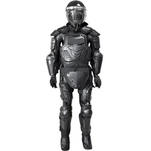
A sleek-looking motorcycle jacket with built-in armor might complete your riding aesthetic, but does it truly complete your safety system? The critical difference between fashion and function often boils down to a small, often overlooked label: the CE certification. This European standard is the definitive benchmark for impact protection in motorcycle gear, transforming padding into performance-oriented armor.
The usage scenario for CE-certified armor is singular: mitigating the devastating forces of a crash. Unlike casual wear, these pads are strategically placed over vital impact zones-shoulders, elbows, knees, hips, and the back-where impact with the road or other objects is most likely. Their purpose isn't just comfort; it's to absorb and dissipate kinetic energy before it can cause fractures, severe bruising, or long-term joint damage.
The materials used are where the real science lies. There are two primary categories:
Soft Armor: Made from high-density foams like EVA or PU. These are flexible and comfortable for all-day riding, designed to compress upon impact to absorb energy. They are typically rated under the older EN 1621-1 standard.
Hard Shell & Composite Armor: This is where technology excels. Many modern pads incorporate advanced materials like D3O®, which remains flexible at normal temperatures but instantly stiffens upon sharp impact. Other options include multi-density foams and hard polymer shells that slide on impact to reduce friction burns and distribute force more effectively. These are tested under the updated EN 17092 (for garments) and EN 1621-1 (for specific protectors) standards.
The efficacy is measured in levels:
CE Level 1: Absorbs a lower amount of impact energy (transmitting less than 18 kN of force on average in tests). Suitable for urban riding at lower speeds.
CE Level 2: Offers higher protection, transmitting less than 9 kN of force on average. This is the recommended level for most street riding, especially at highway speeds. A Level 2 pad is often thicker or uses more advanced materials than its Level 1 counterpart.
Choosing the right armor is paramount. First, look for the CE label itself-many jackets have pockets for armor, but the pads themselves must be certified. Check the level (Level 2 is ideal). Ensure the armor fits the pocket snugly; a loose pad can shift in a crash, exposing the joint it's meant to protect. Consider upgradability; many jackets allow you to replace standard foam with higher-performance aftermarket armor. Remember, the best back protector is a full-length one that shields the entire spine, not just a small kidney belt insert. Your armor shouldn't be a hidden secret; it should be your most trusted, scientifically-backed piece of riding equipment.
Choosing the right armor is paramount. First, look for the CE label itself-many jackets have pockets for armor, but the pads themselves must be certified. Check the level (Level 2 is ideal). Ensure the armor fits the pocket snugly; a loose pad can shift in a crash, exposing the joint it's meant to protect. Consider upgradability; many jackets allow you to replace standard foam with higher-performance aftermarket armor. Remember, the best back protector is a full-length one that shields the entire spine, not just a small kidney belt insert. Your armor shouldn't be a hidden secret; it should be your most trusted, scientifically-backed piece of riding equipment.