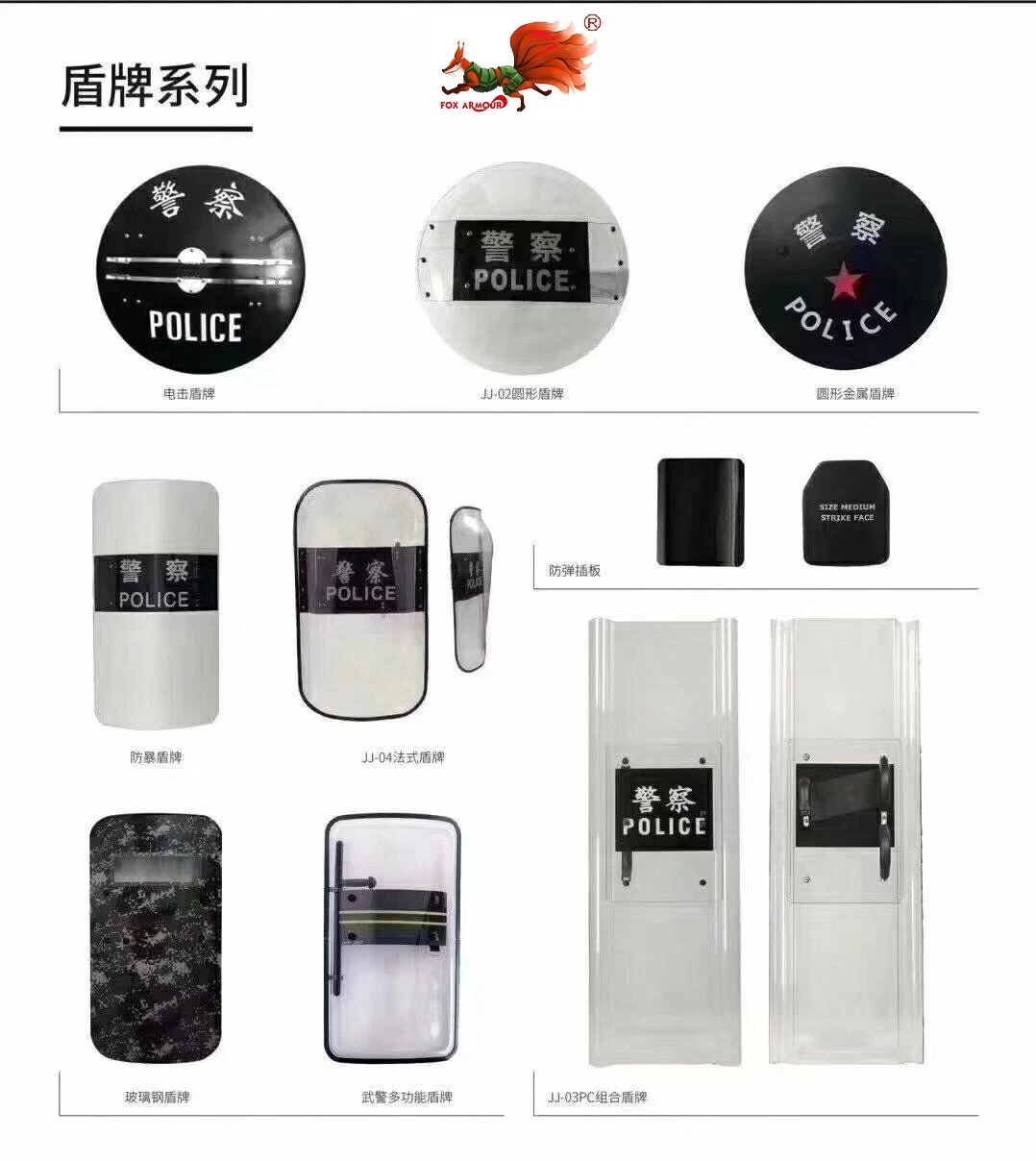
Material Evolution: Modern shields are primarily made from polycarbonate or advanced composites like Lexan. These materials are chosen for their exceptional impact resistance, optical clarity, and light weight, a significant upgrade from older heavy metal or wooden shields.
Multi-Layer Lamination: High-end shields use a lamination process. Multiple layers of polycarbonate, sometimes with anti-scratch and anti-fog coatings, are fused together. This prevents the shield from splintering upon impact, even from high-energy objects like bricks or Molotov cocktails.
Ergonomic Design: The design is not arbitrary. The large size provides cover for vital areas, while the curved shape helps deflect projectiles and absorb energy. An adjustable arm strap and grip system allow for secure handling and quick maneuverability, reducing officer fatigue.
Multi-Functionality: Many modern shields feature built-in features such as viewing ports, LED lighting systems to disorient aggressors, and compatibility systems to interlock with other shields, forming a continuous phalanx for unit advancement.